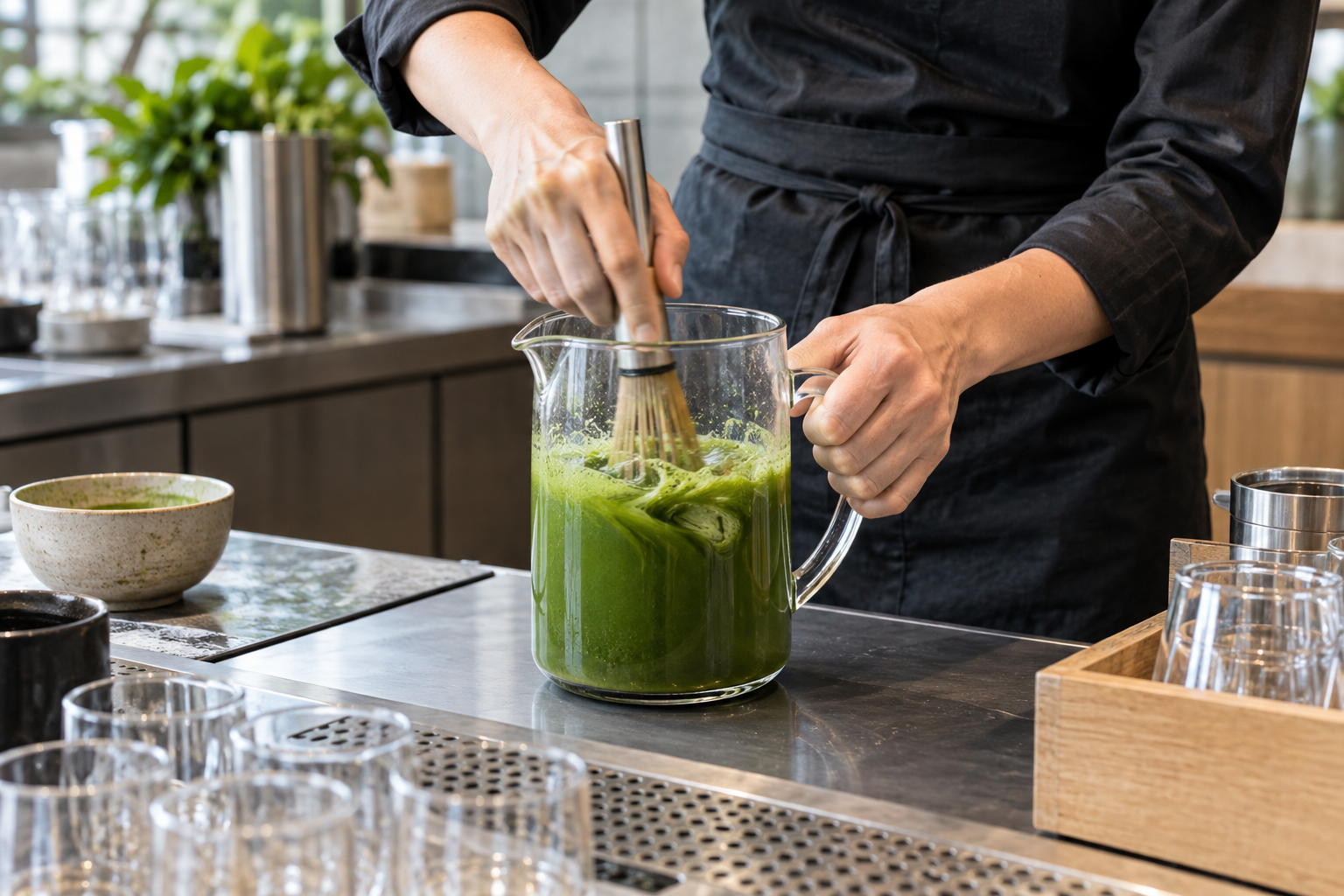

High labor costs, differences in experience between shifts, and large volumes at peak times all make hospitality service difficult to standardize. Powder tea can reduce preparation and clean-up work while preserving a clear tea experience. Mixing a measured amount with water creates a practical business format with a different strength from leaf extraction.
Three practical benefits for busy service teams
1. Consistency: easier to keep quality steady across the team
Leaf tea changes with water temperature and extraction time. By standardizing the powder quantity, water volume, and mixing procedure, a team can create a repeatable preparation routine that depends less on individual staff experience.
2. Speed and volume: easier response during peak periods
Powder tea can be prepared in the amount needed at the service point. This is useful for events, large banquets, welcome drinks, and other situations where many beverages must be ready within a short time. A measured recipe also helps supervisors plan stock and portions.
3. Clean-up: less wet tea leaf waste after service
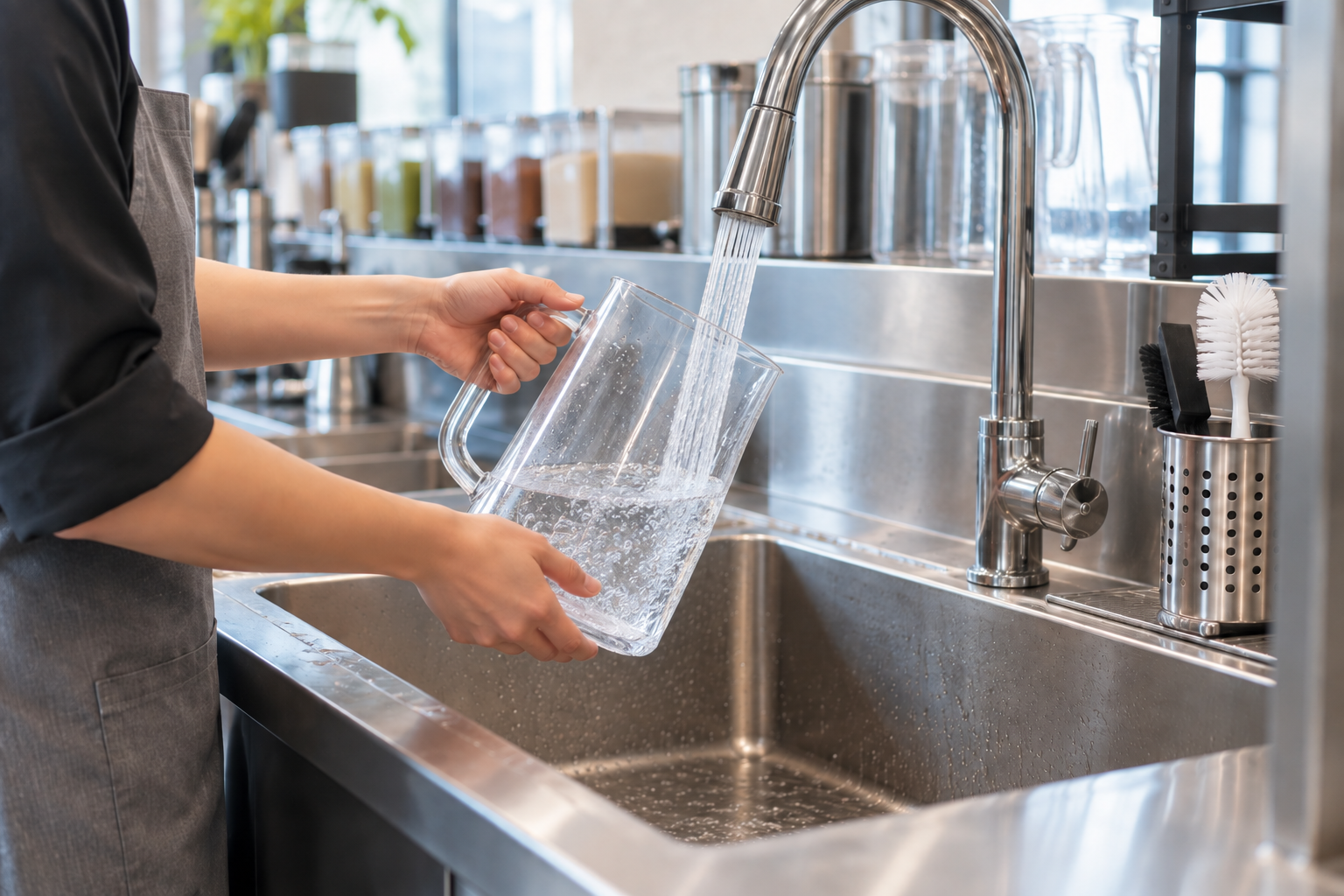
Using leaf tea creates wet tea leaves and leaves residue in pots, strainers, and other equipment. Powder tea can reduce this waste and simplify the cleaning routine, especially when the team is moving quickly between service periods.
Powder tea launch checklist
- Powder quantity and water volume for one cup and one batch
- Solubility and taste in cold water and room-temperature water
- Cleaning methods for stirrers, dispensers, and nozzles
- Storage temperature, service time, and discard rules after preparation
- English ingredients, storage instructions, and service labeling
- Product specifications and the differences between powder green tea, konacha, and matcha
Powder tea is not a magic solution for every operation. It becomes a reliable option when the recipe, hygiene steps, storage, and labeling are standardized and the team measures actual service volume. Begin with a controlled test, listen to staff and guests, and adjust the format to fit the pace of the location.