
For hotels, restaurants, and other hospitality teams in the United States, cold brew sencha offers a refined, unsweetened beverage with a clear Japanese identity. The same gentle approach used for cold brew coffee can bring a fresh perspective to green tea service.
The result depends on water, tea quantity, steeping time, and temperature. Before service begins, confirm the serving size, extraction conditions, holding time, refrigeration, and food-safety standards with the tea supplier and the facility food-safety team.
Three hospitality scenes where cold brew sencha shines
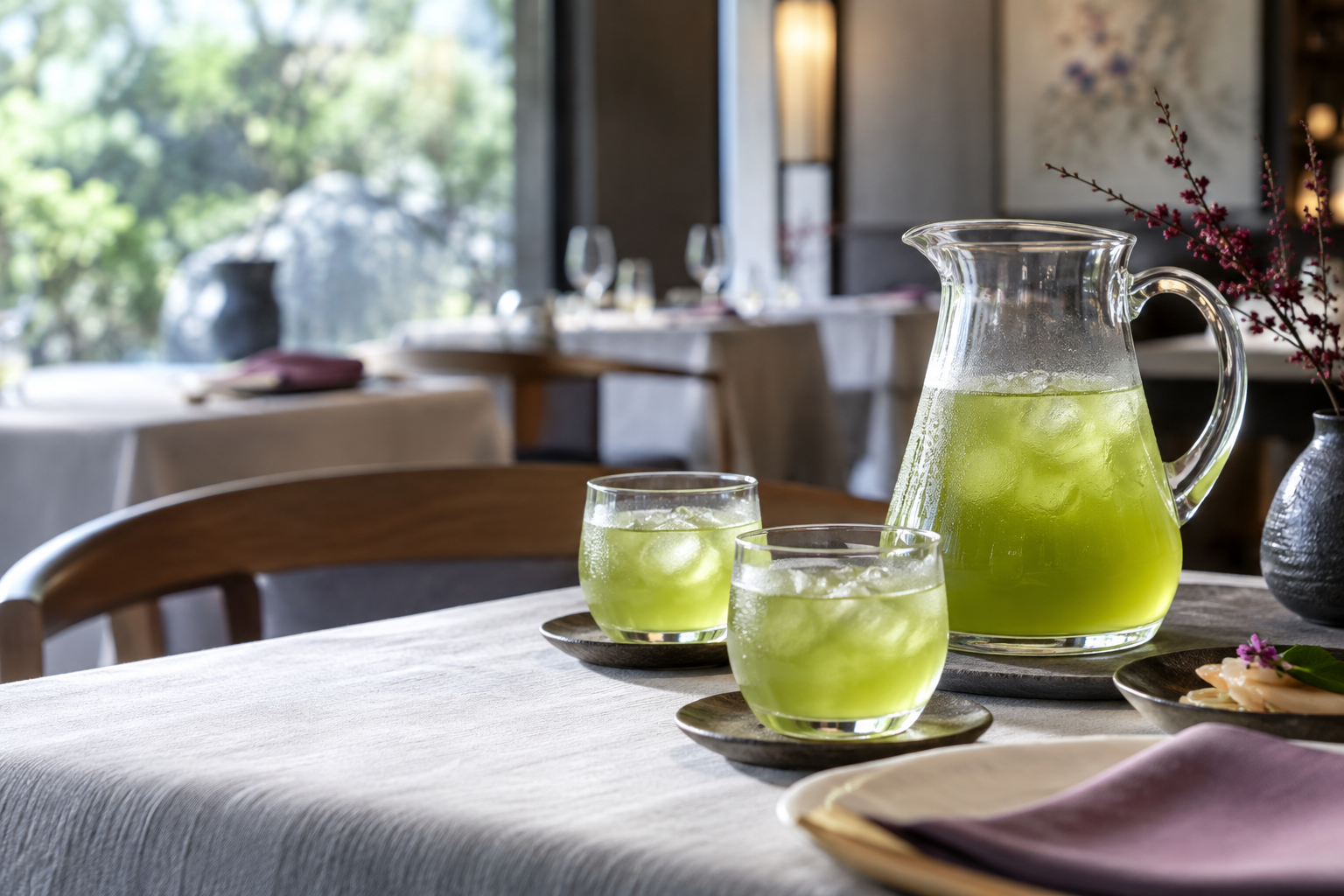
1. Pitcher service: a premium experience for the dining room
A transparent pitcher lets guests see the clear color of the tea and makes the service feel intentional. In fine dining, cold brew sencha works as an unsweetened alternative to water, juice, or soft drinks, while its clean finish pairs naturally with a wide range of dishes.
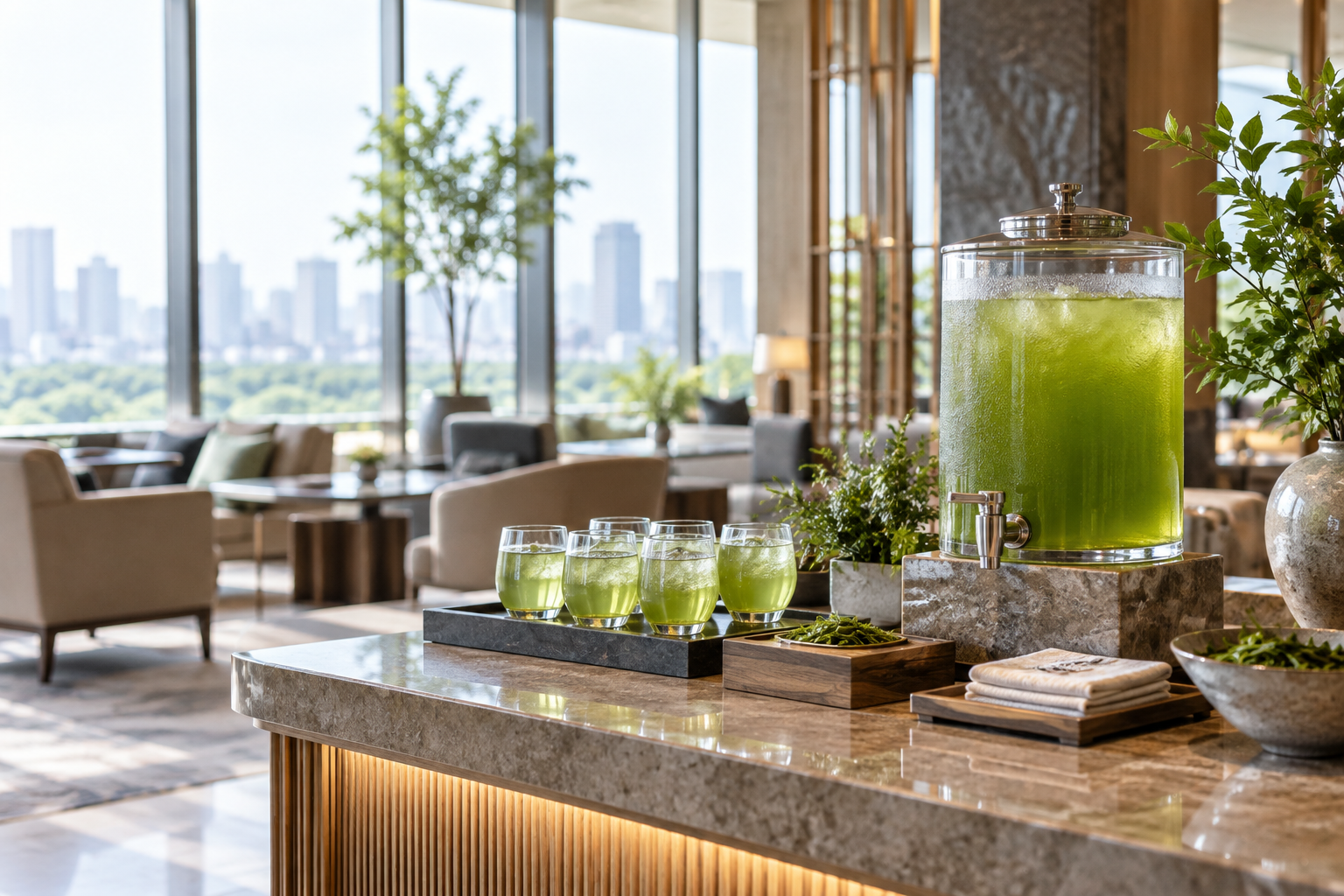
2. Self-service: a wellness-minded lounge offering
A chilled pitcher or dispenser can add a calm, premium touch to a hotel lobby, lounge, breakfast area, or guest hydration station. Place the tea with clear serving instructions and suitable glasses so guests can help themselves without slowing the service team.
3. In-room amenity: a thoughtful welcome after arrival
A chilled bottle or prepared serving on a minibar or welcome tray gives guests a quiet moment of refreshment after travel. Pair the tea with water, a clean glass, and a short English description so the gesture feels easy to understand from the moment of arrival.
Launch checklist and operating settings
- Expected daily serving volume and peak service periods
- Pitcher and bottle capacity, plus refill frequency
- Extraction recipe, refrigeration conditions, and discard rules
- English product name, ingredients, storage, and service labeling
- The right choice of tea bags, loose leaves, or food-service packaging
Cold brew sencha becomes part of the hospitality value when the vessel, presentation, refill routine, and guest explanation are designed together. Start with a small service test, measure actual demand, and refine the recipe and operating routine before expanding to every location.